
Most founders who struggle to find clients don’t have a lead problem as much as a focus problem: they try to sell to any company that might need them, send the same long email to hundreds of people, and then conclude that outreach simply doesn’t work. This guide takes the opposite approach, built on reaching fewer people who are chosen carefully and contacted well, and it follows the same workflow we use ourselves and set up for our clients, explained step by step from the first search to the first booked call.
““50 well-chosen contacts beat 500 random ones. Every time.””
Why Do Most Founders Struggle to Find Their First B2B Clients?
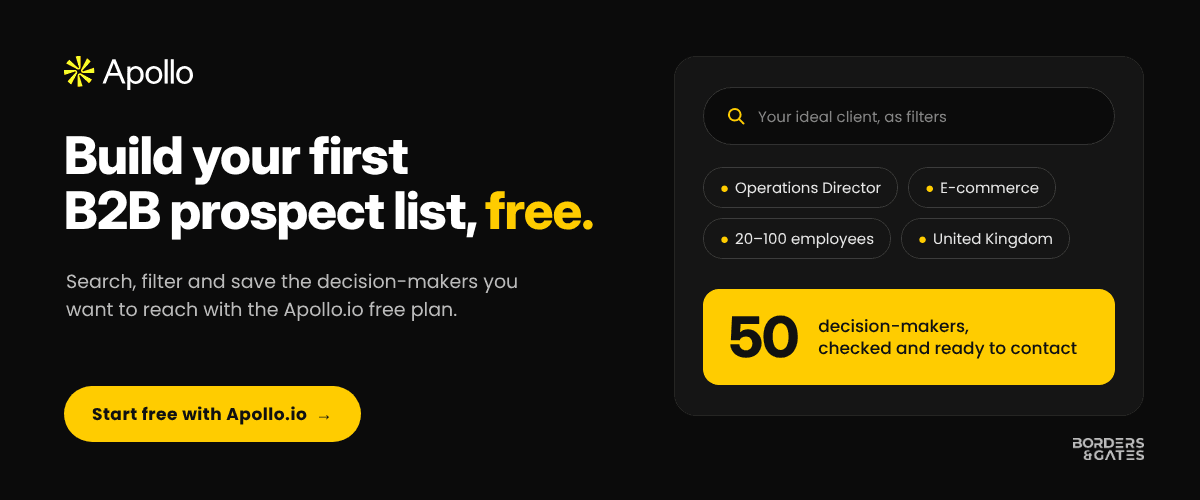
- The target is too wide. "Small businesses" is not a market. "Operations directors at e-commerce brands with 20 to 100 employees in the UK" is.
- The list is bought, not built. Old or unverified lists mean bounced emails and a damaged sender reputation.
- The email is about you. Long introductions, company history and attachments get skipped.
- There is no follow-up. Many replies come after the second or third message, not the first.
Where Should You Look First? Your Warm Network?
Research into how successful B2B companies won their first customers shows the same pattern: most early clients came from people the founders already knew, such as former colleagues, past clients and friends in the industry. Only then did targeted outreach take over. So before you build a list, write down 20 people who know your work and could either become a client or introduce you to one. Send each a short, personal message. Then use the steps below to reach everyone else.
Step 1: How Do You Define Your Ideal B2B Client?
Before you open any tool, write one sentence that describes the client you want most. Use this template:
“We help [job title] at [industry] companies with [number] employees in [country] who need [outcome].”
Example: "We help operations directors at e-commerce brands with 20 to 100 employees in the UK who need faster, cleaner reporting." Every filter you use in Apollo.io comes from this sentence. If you can't write it, the tool can't help you yet. Not sure who your best client is? This is exactly what our Strategy Consulting team works through with founders.
Step 2: How Do You Set Up Apollo.io?
Create an account on Apollo.io with your work email. The free plan is enough to follow this guide.
- Searching and filtering are free. Credits are only used when you reveal a contact's email or phone number.
- The free plan includes a monthly credit allowance (75 credits a month at the time of writing). One verified email costs one credit, so 50 contacts fit inside one month.
- Avoid revealing phone numbers at first. They cost more credits than emails.
- Connect your email inbox so you can send and track messages from one place.
Step 3: How Do You Build a B2B Prospect List in Apollo.io?
Turn your sentence into filters Open the People search and match each part of your sentence to a filter:
Use Job titles + Seniority. Example: Operations Director, Head of Operations; Director, VP.
Use Number of employees. Example: 21-50, 51-100.
Use Location. Example: United Kingdom.
Save the search. Saved searches are free and update as new matching people appear.
How Do You Decide Which Contacts to Reach Out to First?
Sort the results before you spend credits
A strong match on every filter, with a clear reason your service helps them.
A good match, but no clear reason to contact them today.
Close, but not your client
Reveal emails only for the first group, one decision-maker per company, until you reach 50.
Step 4: How Do You Check and Clean Your List?
Ten minutes of checking saves weeks of poor results.
Remove anything marked unverified or risky.
Anyone already in your CRM or past conversations.
Confirm they still match your sentence.
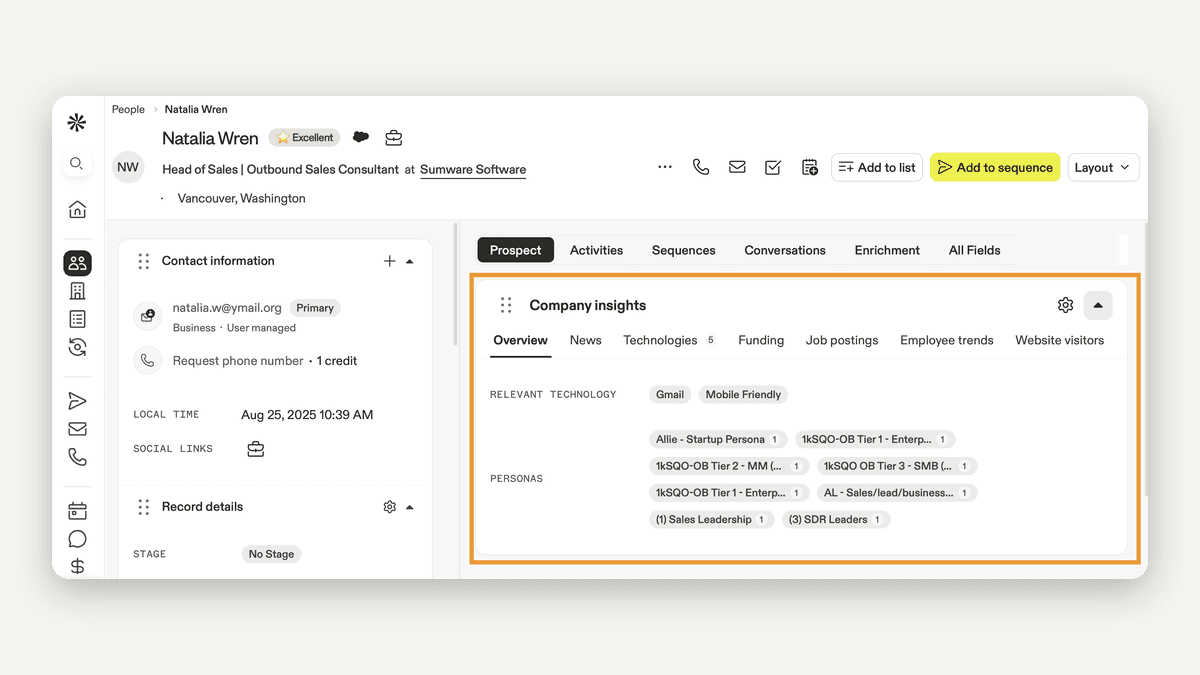
a recent hire, a new market, a product launch. This becomes the first line of your email.
Step 5: What Should Your First Cold Email Say?
Keep it under 90 words, in plain text, with one clear question and no attachments. Here are three templates that sound like a person, not a campaign.
Template A: The observation & Template B: The relevant result & Template C: The simple question
Template A: The observation
Subject: Quick question about [company]'s reporting Hi [first name],
- I saw [company] has opened in two new markets this year. That usually means more data across more tools, and reporting that takes longer than it should.
- We help operations teams at growing e-commerce brands bring that into one clear weekly view. Is reporting something you're looking at this quarter?
Template B: The relevant result
Subject: [Outcome] for [type of company] Hi [first name],
- We recently helped a [similar company type] [specific, real result]. The main change was [one sentence on how].
- Given [company]'s [specific detail], I thought it might be relevant. Worth a 15-minute call to see if it applies?
Template C: The simple question
Subject: [Company] + [topic] Hi [first name],
- Who at [company] looks after [area]? I have an idea for [specific improvement] and
- wanted to send it to the right person.
- Thanks,
Step 6: How Often Should You Follow Up?
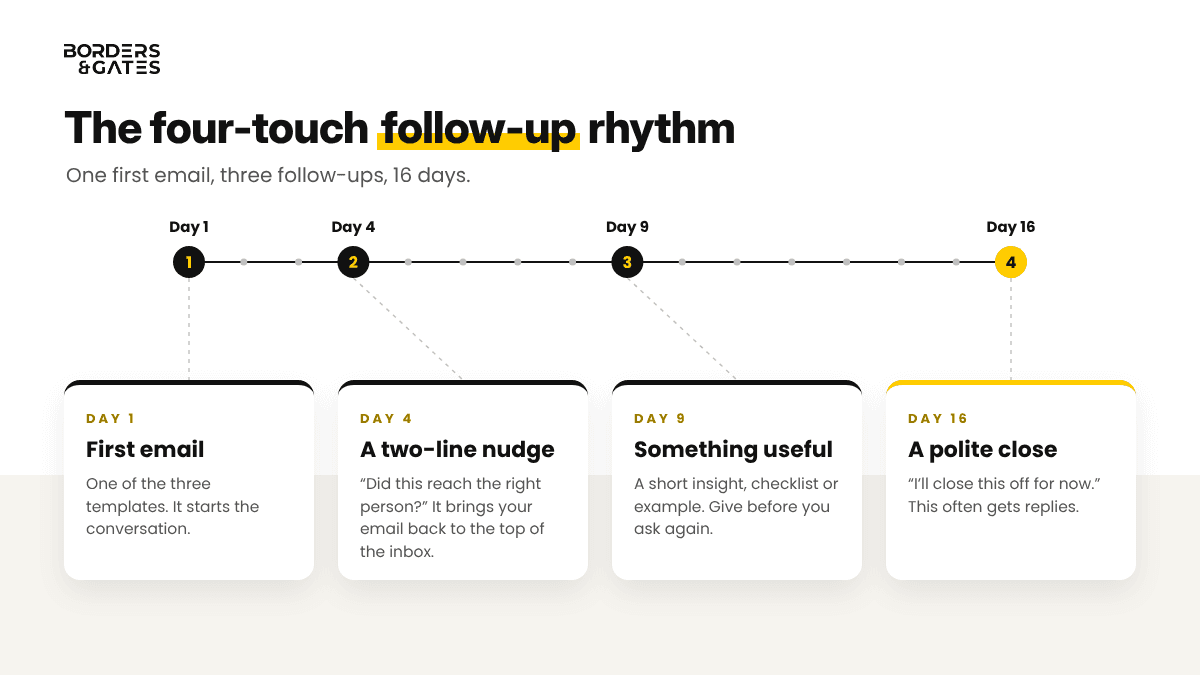
A four-touch rhythm over 16 days Most of the work happens after the first email. You can schedule this with an Apollo.io sequence or send it manually.
One of the templates above. It starts the conversation.
Reply to your own email: "Did this reach the right person?" It brings the message back to the top of the inbox.
A short insight, checklist or example relevant to them. Give before you ask again.
"I'll close this off for now. If [topic] becomes a priority, I'm here." This often gets replies.
Step 7: How Do You Track Replies and Book Calls?
Keep a simple tracker, in Apollo.io, your CRM or a sheet, with five columns: contact, date of first email, replied (yes/no), call booked (yes/no), outcome.
A ready-made option is the B&G Task Tracker from our Digital Hub.
Which template got replies? Which industry responded best?
Open tracking is unreliable.
the sentence, the filters or the first line, then build the next 50.
What Mistakes Get Cold Emails Ignored?
- Writing about your company before the reader's problem.
- Sending the same email to every contact without a personal first line.
- Adding links, attachments or images to the first email.
- Asking for a 45-minute meeting instead of a short reply.
- Contacting several people at the same company on the same day.
- Stopping after one email.
What Other Ways Can You Find B2B Clients?
Outreach brings the fastest first conversations. These channels build steadier demand over time and work best together.
- LinkedIn content (months): regular, useful posts in your niche make prospects recognise your name before you email them.
- Referrals (weeks): ask every happy client for one introduction to a similar company.
- Partnerships (weeks to months): team up with businesses that serve the same clients without competing with you.
- Industry communities and events (months): help first, pitch later, in the groups and events your clients attend.
- New markets (months): selling into another country? Local partners and market research open doors faster. Our Market Access & Business Development team can help.
- • Search-friendly articles (months): answer the questions your clients search for, so they find you.
- • Newsletter (months): stay in touch with people who are not ready to buy yet.
What We'd Tell a Founder Starting Today?
- 50 well-chosen contacts beat 500 random ones. Every time.
- The first line decides the reply. Spend most of your time on the personal detail.
- Follow-ups do the heavy lifting. Plan all four touches before you send the first.
- Treat it as a weekly habit, not a one-off campaign.
Frequently Asked Questions
What people search for ?
Start by defining one narrow ideal client, then build a small list of decision-makers in a prospecting tool such as Apollo.io and contact them with short, personal emails. At the same time, join one online community where those clients spend time and contribute before you pitch.
Contact your warm network first, then send short, personal emails to a small list of decision makers who match your ideal client. Both can produce first conversations within days.
Your own network, LinkedIn, industry communities and the free plan of a prospecting tool such as Apollo.io, where searching and filtering cost nothing and a monthly credit allowance covers your first verified emails
One personal first line about their company, one sentence on how you help businesses like theirs, and one simple question. Keep it under 90 words, in plain text, with no attachments.
Yes, when it is targeted and personal. Short emails to a carefully chosen list, with a specific first line and a clear question, work far better than mass campaigns.
Turn your ideal client into People search filters (job title, seniority, industry, company size, location), save the search, reveal verified emails only for your best-fit contacts, then send them a short email sequence and track replies.
Three follow-ups over about two weeks is a good balance: enough to be seen, without becoming a nuisance. Stop as soon as someone replies or asks you to.
It depends on your offer and sales cycle. Plan to work through at least one full list of 50 with all follow-ups before judging results.
Your first 50 B2B clients come from focus, not volume: one clear ideal client, a clean list built in Apollo.io , short personal emails and a follow-up rhythm you keep every week. If you would rather have a steady pipeline without the manual work, our Marketing Outsourcing team sets up and runs your outreach, from defining your ideal client to booking calls in your calendar.
Subscribe to our newsletter