
For years, talking to AI has followed the same rhythm. You speak. It waits. You stop. Then it responds. That pause, small as it seems, has always given voice AI away. No matter how capable the underlying language model became, the conversation itself still felt like software: structured, sequential, and slightly behind.
“GPT-Live removes the pause, and that changes what voice AI is for.”
What Is GPT-Live?
On July 8, 2026, OpenAI introduced GPT-Live, a new generation of voice models powering ChatGPT Voice. It's not a speed upgrade or a better set of voices. It changes the underlying architecture of how the AI listens, thinks, and responds, and in doing so, closes the gap between talking to a machine and talking to a person.
GPT-Live is OpenAI's third-generation voice model for ChatGPT, built on a full-duplex architecture that allows it to listen and speak at the same time. It replaced Advanced Voice Mode as the default voice experience across ChatGPT's Go, Plus, Pro, and Free tiers, rolling out globally on iOS, Android, and the web.
Instead of processing a conversation as a series of separate turns, GPT-Live continuously analyzes audio input in real time. Many times per second, it decides whether to keep listening, respond immediately, pause, acknowledge, or hand off a harder question to a more capable reasoning model working quietly in the background.
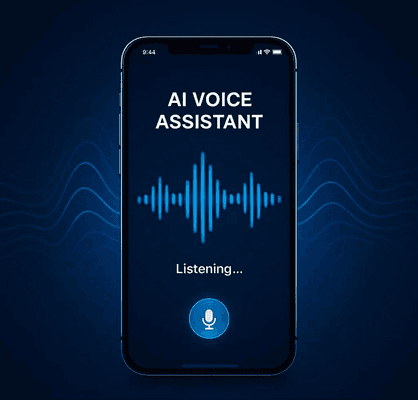
From Turn-Based AI to Real-Time Conversation
Earlier versions of ChatGPT Voice, including Advanced Voice Mode, relied on a three-step pipeline: convert speech to text, generate a response, then convert that response back into speech. It worked, but it created a structural delay. The model had to wait for you to stop talking before it could start processing what you said.
GPT-Live replaces that pipeline with a full-duplex system, meaning input and output are processed simultaneously rather than in sequence. The architecture has two layers working together: a continuous interaction layer that manages the flow of conversation in real time, and a delegation layer that quietly routes complex reasoning, research, or search tasks to OpenAI's frontier model, GPT-5.5, without breaking the exchange.
That second layer matters more than it might first appear. It means the voice model itself doesn't need to carry the full weight of every hard question. It can keep a natural conversation going on the surface while heavier reasoning happens underneath, then bring the answer back in without the user noticing the handoff.
What Makes GPT-Live Different
The upgrade goes beyond faster response times. GPT-Live introduces a set of behaviors that previous voice assistants couldn't replicate:
- Natural interruptions. You can interrupt mid-response and the conversation adjusts, rather than resetting.
- Continuous listening. Pauses and moments of silence no longer signal the end of your turn.
- Fluid back-and-forth dialogue that mirrors how people actually talk, including overlapping speech.
- Live translation during an ongoing conversation, without switching modes.
- Background task handling, so the model can stay conversational while more complex requests are processed.
- Visual cards for information such as weather, sports scores, and stock data, surfaced automatically when relevant.
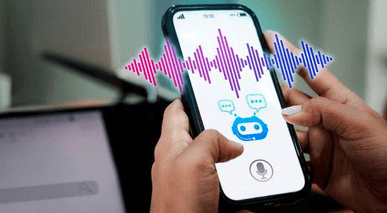
Together, these shift ChatGPT Voice from answering questions to participating in a conversation.
GPT-Live-1 vs. GPT-Live-1 Mini: What's the Difference?
OpenAI released two versions of the model at launch, so every user gets the new architecture regardless of subscription tier. Both versions share the same conversational architecture. The difference is in reasoning depth and the resources behind each response, not in how natural the conversation feels.
GPT-Live-1
- Availability: Go, Plus, and Pro subscribers
- Reasoning depth: delegates to GPT-5.5 for complex reasoning and web search
- Best suited for: professional work, research, planning, extended conversations
- Architecture: full-duplex
GPT-Live-1 Mini
- Availability: Free users
- Reasoning depth: optimized for efficiency and accessibility
- Best suited for: everyday conversational use
- Architecture: full-duplex
As of launch, GPT-Live is available only through the ChatGPT consumer apps and website. Developer API access has not shipped yet, so teams building voice features into their own products are, for now, working with OpenAI's existing realtime API rather than GPT-Live directly. That's worth tracking if voice is part of your product roadmap.
Why This Matters
Most conversations about AI progress focus on making models smarter. GPT-Live is focused on something different: making AI feel natural to talk to.
That distinction has real consequences. When a voice conversation stops requiring turn-taking discipline, voice stops being a novelty feature bolted onto a chat app and starts becoming a genuine interface, something you might reach for the way you'd call a colleague rather than open an app and type.
Think about what that unlocks in practice: brainstorming out loud during a commute, getting a conversation translated in real time while traveling, thinking through a presentation on a walk, or working through a problem with AI without constantly managing whose turn it is to speak.
For businesses, this is where voice AI starts to move from a customer service add-on toward something closer to an operational interface, useful anywhere a team needs fast, natural, low-friction interaction with information or systems, without someone sitting at a keyboard.
A New Direction for AI Interfaces
GPT-Live is part of a broader shift happening across the AI industry. The competition isn't only about who builds the largest language model anymore. It's increasingly about who builds the interface that requires the least effort to use.
Keyboards have been the default way people interact with computers for decades, not because they're the most natural interface, but because voice technology couldn't keep pace with how people actually speak: overlapping, interrupting, pausing mid-thought. GPT-Live is a signal that gap is closing.
“The measure of success won't be that AI sounds more human. It will be that people stop noticing they're talking to one at all.”
Frequently Asked Questions
Common questions
GPT-Live is OpenAI's full-duplex voice model, launched July 8, 2026, that replaced Advanced Voice Mode as the default voice experience in ChatGPT. It listens and speaks simultaneously instead of waiting for turns, and delegates complex reasoning to GPT-5.5 in the background.
Advanced Voice Mode processed conversations one turn at a time. GPT-Live uses a full-duplex architecture that processes incoming audio continuously, allowing natural interruptions, overlapping speech, and uninterrupted reasoning handoffs to a more powerful model.
Yes. GPT-Live-1 Mini is available on the Free tier, while GPT-Live-1, the full version with deeper reasoning delegation, is reserved for Go, Plus, and Pro subscribers.
Not yet. At launch, GPT-Live is available only through the ChatGPT consumer apps and web interface. Developers building real-time voice features currently rely on OpenAI's existing realtime API rather than GPT-Live directly.
Voice is emerging as a primary interface for AI, not just a feature within an app. GPT-Live is a signal that the gap between talking to a machine and talking to a person is closing, and businesses building on voice today are working with an interface that is only going to get more natural from here.
Subscribe to our newsletter